2010 Ac Schnitzer ACS3 3.5d Sports Coupe Never Tires Of Receiving Awards

2010 Ac Schnitzer ACS3 3.5d Sports Coupe

Ac Schnitzer ACS3 3.5d Sports Coupe, AC Schnitzer never tires of receiving awards. Very recently, the carmaker got a third world record for Aachen after having gone to Nardo in southern Italy. Third World Record in Succession: AC Schnitzer builds fastest diesel car! AC Schnitzer ACS3 3.5d Coupé reaches 288.7 km/h in Nardo. It's a hat-trick: for the third time, AC Schnitzer has gone to Nardo in southern Italy and brought home a third world record for Aachen.
2010 Ac Schnitzer ACS3 3.5d Sports Coupe

Historically, many records are set in the high-speed circuit. Each year in southern Italy, in collaboration with the AUTO BILD sportscars’ editors and under the aegis of Continental AG, the top vehicle tuners compete. This year, it was on Oct. 18-19, 2009. The record for the fastest road-legal diesel car was broken by the AC Schnitzer ACS3 3.5d Coupe with a speed of more than 8.7 km/h.288.7 km/h.
2010 Ac Schnitzer ACS3 3.5d Sports Coupe

This was the figure on the display of the GPS speedometer system on the 13 km long high-speed circuit after the lap of the AC Schnitzer ACS3 3.5d Coupé. The record that was broken had been that of 2006 with the TENSION as the fastest road-legal BMW. The record had held in 2007 when the GP3.10 GAS POWERED entered to represent gas-powered vehicles. AC Schnitzer cited its power upgrade as the reason for its success.
2010 Ac Schnitzer ACS3 3.5d Sports Coupe

Naturally the power upgrade which took the latest world record holder to success is part of the extensive AC Schnitzer special accessory range and available for all vehicles based on the 3.5d engine. It is TÜV-approved and available from BMW dealers.

2010 Ac Schnitzer ACS3 3.5d Sports Coupe

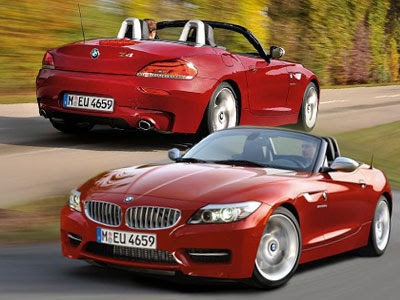
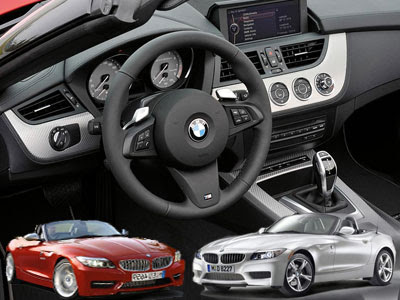
Another impressive performance in Nardò came from the AC Schnitzer ACS4 3.5 turbo (based on the BMW Z4 sdrive 35i). At 303.1 km/h, this was not a new world, but such a high speed is almost unheard of for a Roadster. The Z4 was also running with the commercial version of the AC Schnitzer performance upgrade for 3.5i engines.

2011 BMW Sports Coupe Z4 sDrive35is Debut At The 2010 North American International Auto Show

2011 BMW Sports Coupe Z4 sDrive35is

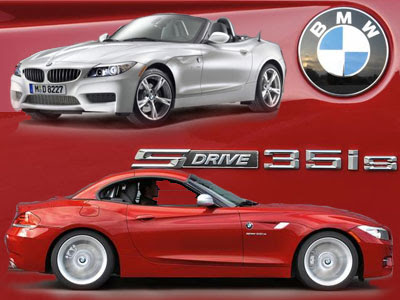
The New BMW Z4 sDrive35is distills the Roadster's performance potential to produce one of BMW's fastest and best-handling Roadsters ever. The BMW Z4 sDrive35is is making its world debut as a 2011 model at the 2010 North American International Auto Show (NAIAS) in Detroit. It arrives at authorized BMW Centers in Spring 2010.
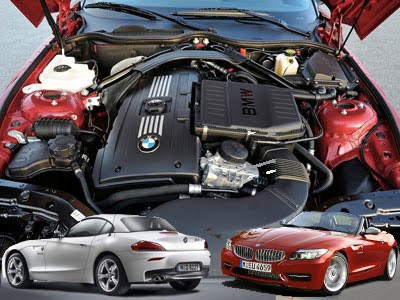
The combination of twin low-mass turbochargers and High Precision direct injection offers an output a naturally-aspirated engine would only be able to provide through more cylinders and larger displacement.
2011 BMW Sports Coupe Z4 sDrive35is

The turbocharger system developed for the engine of the new BMW Z4 sDrive35is maintains a high output throughout the entire engine speed range. Nominal peak torque is increased to 332 lb-ft from 1,500 rpm to 4,500 rpm. Maximum output of 335 hp is delivered at 5,900 rpm. The enhanced engine management system of the BMW Z4 sDrive35is includes an electronically-controlled overboost function to briefly increase torque under full load by another 37 lb-ft. This temporary torque peak of 369 lb-ft gives the car a significant increase in acceleration. The BMW Z4 sDrive35is will complete the sprint from a standstill to 60 mph in just 4.7 seconds (preliminary). Top speed of the BMW Z4 sDrive35is is limited electronically to 250 km/h or 155 mph.
2011 BMW Sports Coupe Z4 sDrive35is

The BMW Z4 sDrive35is offers outstanding power and performance without an increase in fuel consumption or emissions. Its figures are expected to match those of the BMW Z4 sDrive35i with Double-Clutch Transmission on the EPA test cycle. This balance of performance and fuel efficiency results from the fundamental design and layout of the BMW inline-6, which combines twin turbochargers with High Precision direct injection. The fuel injectors operate at a pressure of up to 200 bar (2900 psi), distributing fuel in a conical spray pattern throughout the combustion chamber. Another advantage of direct fuel injection is its cooling effect which allows higher compression while reducing the possibility of detonation. Further technologies offered under the BMW EfficientDynamics philosophy include Brake Energy Regeneration, Electric Power Steering, and on-demand operation of engine accessory units.
2011 BMW Sports Coupe Z4 sDrive35is

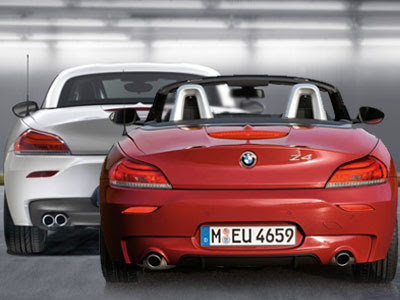
The exhaust system of the BMW Z4 sDrive35is has been tuned specifically for this model. Acoustic engineering gives the car a very unique sound pattern across the speed range. This tuned sound is the result of special baffles and a unique set of mufflers. The sound is characterized by a deep rumble with a focus on the low frequency sound range.
2011 BMW Sports Coupe Z4 sDrive35is

The standard 7-speed Double-Clutch Transmission (DCT) in the BMW Z4 sDrive35is combines the best in driving dynamics and efficiency. A highlight is the dual-mass flywheel, configured for the higher levels of power and performance.
2011 BMW Sports Coupe Z4 sDrive35is

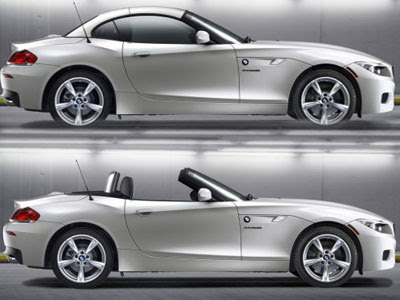
The BMW Z4 sDrive35is includes new M Sport upgrades such as M Aerodynamics and adaptive M Suspension. The adaptive M Suspension combines a ride-height reduction of 10 millimeters (almost 0.4″) with electronically controlled shock absorbers (Dynamic Damping Control) to improve the vehicle’s agility without compromising ride comfort. Special 18-inch light-alloy wheels in five-spoke design round off the sporty character of the Z4 sDrive35is. 19-inch light-alloy wheels are available as an option.

2010 Ferrari P540 Superfast Aperta Inspired By One Of The Tales Of Edgar Allan Poe

2010 Ferrari P540 Superfast Aperta

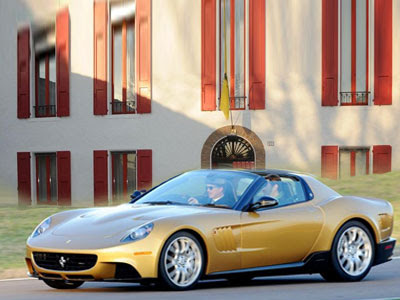
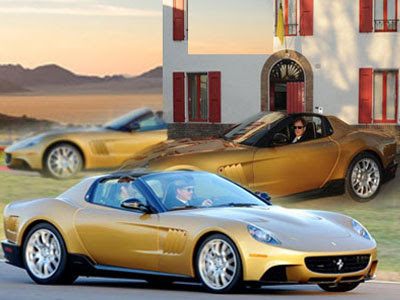
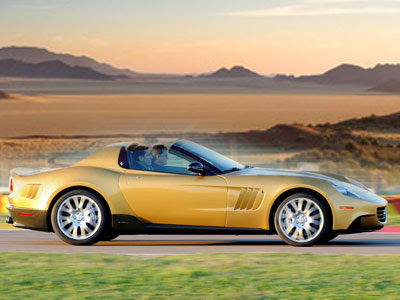
2010 Ferrari P540 Superfast Aperta. The car, the second in a new Special Projects programme created by Ferrari to meet requests from the most discerning clients and collectors to create truly unique models, is based on the Ferrari 599 GTB Fiorano and was inspired by a Carrozzeria Fantuzzi-designed Ferrari built specifically for the 1968 Fellini film, Toby Dammit, itself inspired by one of the tales of Edgar Allan Poe. The first shake-down has been held at Fiorano of a very special one-off, the Ferrari P540 Superfast Aperta, built for an American client.
2010 Ferrari P540 Superfast Aperta
The Ferrari P540 Superfast Aperta's proud new owner, Edward Walson, son of John Walson, the inventor of cable TV, approached Ferrari in 2008 to produce a modern reinterpretation of the gold-coloured car in the film. "I had always dreamed of designing sports cars," Walson explains, "and when I saw this film the decision came of its own accord: one day I would have 'my' Ferrari."
2010 Ferrari P540 Superfast Aperta
In accordance with the Special Project's approach to producing such individual one-offs, the Ferrari P540 Superfast Aperta respects all existing international safety and homologation requirements and is thus road legal. The car was designed by Pininfarina and built in Maranello, and the client was directly involved in each stage of its development. As the 599 GTB Fiorano donor car is a coupé, considerable effort went into strengthening the chassis by using finite element analysis in development and the increase in weight was kept down to just 20 kg by employing carbon-fibre extensively. From the initial sketches to the final, road-legal car took just 14 months. As the client took delivery of the car at Fiorano his excitement was understandable: "This is the most special Christmas present of my life."
2010 Ferrari P540 Superfast Aperta
This special Ferrari P540 Superfast Aperta's colour was inspired by the film "Toby Dammit", one of the three episodes of the film "Histoires Extraordinaires" made in 1968 based on stories by Edgar Allan Poe.
"Toby Dammit", the third of the three episodes, directed by Federico Fellini, with Terence Stamp Salvo Randone and Milena Vukotic, based on the story "Never Bet The Devil Your Head".
The other two episodes, "Metzengerstein" and "William Wilson", were directed by Roger Vadim and Louis Malle.
2010 Ferrari P540 Superfast Aperta
Technical specifications :
# Length: 4731 mm
# Width: 1954 mm
# Height: 1300 mm
# Wheelbase: 2750 mm
# Front track: 1690 mm
# Rear track: 1620 mm
2010 Ferrari P540 Superfast Aperta
# Engine
- Type: 65° V12
- Displacement: 5999 cc
- Maximum power: 456 kW (620 CV) at 7600 rpm
- Maximum torque: 608 Nm (62 kgm) at 5600 rpm
# Transmission: F1 6-speed gearbox
# Tyres
- Front: 245/35 20"
- Rear: 305/35 20"
# Fuel consumption
- Combined cycle: 17.9 l/100 km
- CO2 emissions: 415 g/km

2009 Aston Martin Lagonda Concept Celebrates 100 Years Of Car Production Under The Lagonda Brand

2009 Aston Martin Lagonda Concept
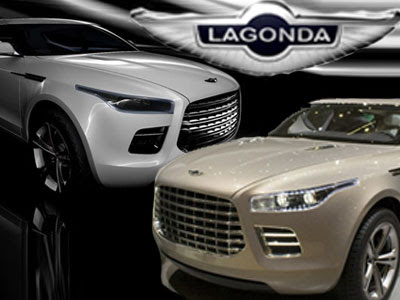
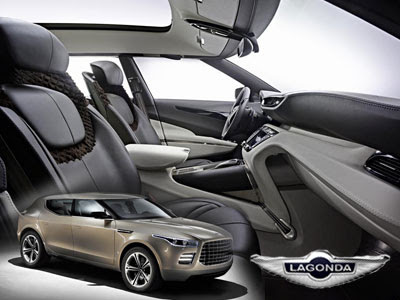
Aston Martin is proud to announce the return of Lagonda, one of the most iconic names in luxury car manufacturing. The intention is for Lagonda to enter the market place with a unique performance luxury product, a vehicle that combines exceptional ability with unsurpassed elegance, inside and out. The LAGONDA CONCEPT is an avant-garde luxury vehicle; with powerful four-wheel drive, a four-seater car that will satisfy the most discerning and demanding owner. The concept demonstrates a commitment to innovative new propulsion technologies, new materials and elegant forms. 'The Lagonda is the luxury car of the future,' says Aston Martin Chief Executive, Dr Ulrich Bez, 'a combination of total usability, a new form and innovative new technology and materials.
The return of Lagonda fulfils a long-term vision. Aston Martin's modern era began in 2001 with the launch of the V12 Vanquish and the construction of the award-winning headquarters at Gaydon, Warwickshire in 2003. In the years that followed, Aston Martin has launched four class-leading new products, revitalising the performance GT category and redefining automotive beauty.An Aston Martin will always be a sports car; modern, exclusive and beautiful, it demands to be driven, with an exceptional character that rewards the enthusiast, both on the road and on the track. Above all, an Aston Martin creates an emotional response.
2009 Aston Martin Lagonda Concept
Under the leadership of Dr Ulrich Bez, Lagonda will bring performance luxury into new markets and territories around the world. Reflecting its remarkable history, Lagonda will return to Russia, enter emerging markets in the Middle East, South America, India and China, as well as responding to demand from the dynamic, innovation-focused consumers of Europe, North America and the Far East.
Lagonda is one of the great names in automotive history, a brand associated with luxury, performance, grace and exclusivity. Since the first Lagonda production car, was built 100 years ago by the American-born Wilbur Gunn, the Lagonda name has undergone several incarnations, before it soon began to excel at creating racing cars and sporting saloons.
2009 Aston Martin Lagonda Concept
Gunn's first car was built in his home workshop in Middlesex, England in 1909. In 1910, Gunn drove his 16/18hp Lagonda Tourer to victory in the Russian Reliability Trial, a spectacular event run by the Imperial Automobile Club of Russia as a public relations exercise for the country's nascent road system. The win brought in many orders, and Gunn focused his attention on the Russian market, establishing dealerships in St Petersburg and Moscow in 1910. The modern Lagonda marries functionalism with luxury, through organic forms, rich materials and complex surfaces. The car is based on an advanced platform that is tailored to accommodate a broad range of future powertrains, including flexfuel, low emission diesel and hybrid systems.
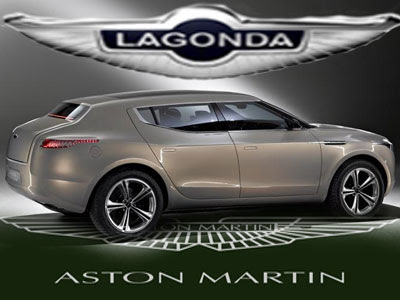
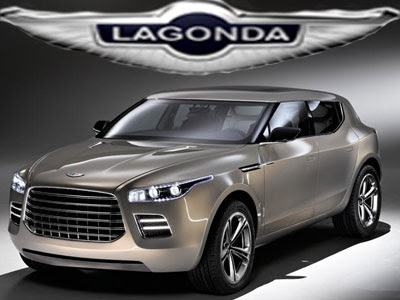
The clear delineation between cabin, shoulder and flank is strongly reminiscent of the powerful and evocative lines of the 1930s era Lagondas, in particular the V12-engined version of the LG6. Viewed from the front of the concept, the deep, strong grille also evokes the presence and frontage of the cars from the inter-war era. The bold character lines that run along the sculpted flanks to the rear ensure the concept is planted firmly on the road. The large 22" wheels and cut-away bodywork offer exceptional ground clearance, while the concept's V12 engine delivers power through all four wheels.
2009 Aston Martin Lagonda Concept
Aston Martin is proud to announce the return of Lagonda, one of the most iconic names in luxury car manufacturing. The intention is for Lagonda to enter the market place with a unique performance luxury product, a vehicle that combines exceptional ability with unsurpassed elegance, inside and out. The Aston Martin Lagonda Concept is an avant-garde luxury vehicle; with powerful four-wheel drive, a four-seater car that will satisfy the most discerning and demanding owner. The concept demonstrates a commitment to innovative new propulsion technologies, new materials and elegant forms. "The Lagonda is the luxury car of the future," says Aston Martin Chief Executive, Dr Ulrich Bez, "a combination of total usability, a new form and innovative new technology and materials."
2009 Aston Martin Lagonda Concept
Not only will Lagonda join Aston Martin in existing core markets, but the unique character of the new brand will help take the company into as many as 100 territories around the world and extend the brand to new customers. "An Aston Martin is an authentic, pure sports car," says Dr Ulrich Bez, "but Lagonda is something else, a new brand that will reach into new markets and have different values to Aston Martin."
Lagonda's history is long and eventful, encompassing two of the most significant figures in twentieth century British engineering, W.O.Bentley and David Brown, racing glory and some of the most dramatic designs in automotive history.

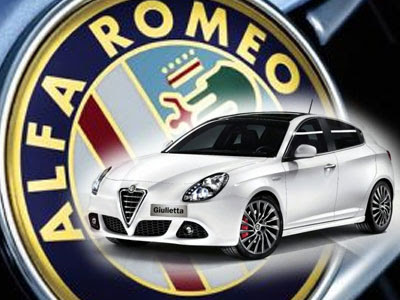
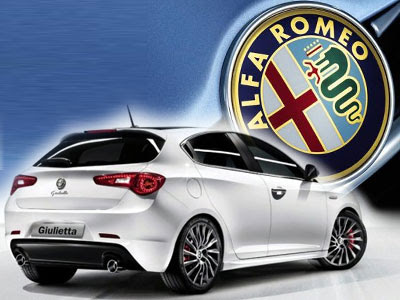
2011 Alfa Romeo Giulietta Sports Car Has Brand-New Architecture

2011 Alfa Romeo Giulietta

The Alfa Romeo Giulietta is expected to give new impetus to the brand in one of Europe's most important segments. Giulietta is a car that, in the fifties, caught the imagination of generations of car enthusiasts, making the dream of owning an Alfa Romeo and enjoying the high level of comfort and technical excellence accessible for the first time. The Alfa Romeo Style Centre has produced a new Alfa Romeo Giulietta, a sports car capable of expressing both great agility on the most demanding routes and providing comfort on everyday roads.
2011 Alfa Romeo Giulietta

The Alfa Romeo Giulietta has brand-new architecture, designed to meet the expectations of the most demanding customers in terms of road holding, agility and safety. Its excellent dynamic performance and great comfort are the result of refined technical solutions implemented in the suspensions, a next-generation steering system, a rigid yet light structure made of aluminium and high-strength steel, and state-of-the-art manufacturing technologies.
Combining sportiness and elegance, the Alfa Giulietta is the result of Alfa Romeo's new direction in style and technology - an approach that started with the Alfa Romeo 8C Competizione supercar and which recalls the brand's glorious past while projecting its traditional values of technology and emotion into the future.
2011 Alfa Romeo Giulietta

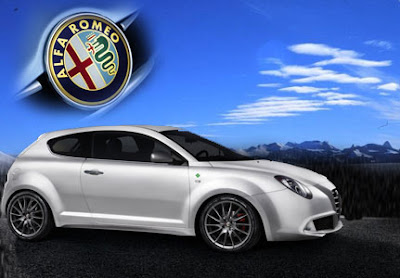
The profile of the Alfa Romeo Giulietta is rich in personality and confers the appearance of an agile, solid model. This is above all the result of the coupé shaped side windows, which highlight dynamic and streamlined shape, and of the concealed rear handles. The side ribbing adds to the car's slender look, while the taut lines closing in on the rear end accentuate the "wedge" shape of the body.
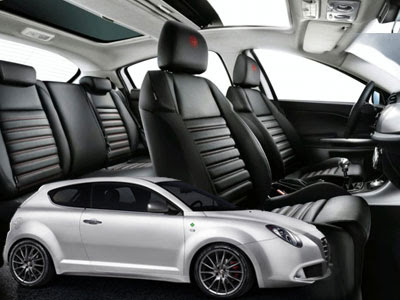
The interior design is taut and light: a horizontally developed dashboard with aluminium element accents and rocker controls which explicitly recall the 8C Competizione. Painstaking attention to detail and the high quality of the materials used are the most advanced expression of Italian style.
2011 Alfa Romeo Giulietta

The Alfa Romeo Giulietta guarantees top level performance and next-generation technology in terms of technical solutions, performance and environmental friendliness. Four Turbo engines will be available at launch, all Euro 5 compliant and fitted with a standard "Start&Stop" system for reducing consumption and emissions: two petrol engines (1.4TB - 120 HP and 1.4TB MultiAir - 170 HP) and two diesel engines (1.6 JTDM - 105 HP and 2.0 JTDM - 170 HP, both belonging to the second generation of JTDM engines). Finally, the range is completed with the lively 1750 TBi - 235 HP with an exclusive Quadrifoglio Verde configuration.
2011 Alfa Romeo Giulietta

The Alfa Romeo Giulietta is fitted with the most sophisticated electronic devices for dynamic control as standard: VDC, DST, Q2 electronic differential and Alfa DNA selector. All these systems guarantee driving safety, dynamism and performance in the best Alfa Romeo tradition.

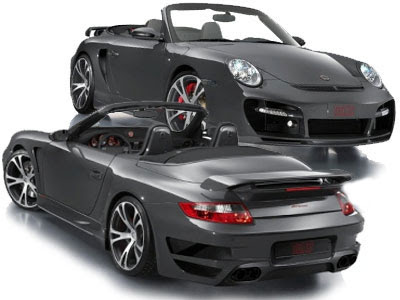
2010 Porsche 911 Turbo Next Generation Sports Cars At The Frankfurt Motor Show

2010 Porsche 911 Turbo

The next generation Porsche 911 Turbo, Porsche is proud to present a new top model at the pinnacle of its broad range of production sports cars.All key features of this high-performance sports car have been improved significantly and combine far-reaching technical innovations with supreme refinement. As a consequence, the new 911 Turbo offers increased performance, lower weight, enhanced driving dynamics and greater fuel efficiency.With respect to dynamic performance and fuel economy in particular, the next generation Porsche 911 Turbo now stands apart from its competitors even more. The new model will be presented to the public for the first time at the Frankfurt Motor Show from 17 - 27 September, 2009.
2010 Porsche 911 Turbo
The heart and highlight of the seventh generation Porsche 911 Turbo is the new power unit displacing 3.8-litres and delivering maximum output of 500 hp (368 kW). The first entirely new engine in the 35 year history of the Turbo comes with features such as Direct Fuel Injection and twin turbochargers with variable turbine geometry, the latter attribute being unique to Porsche on a petrol engine.
2010 Porsche 911 Turbo
The new six-cylinder engine can be combined with the option of the seven-speed Porsche Doppelkupplungsgetriebe (PDK) double-clutch gearbox; and, for the first time, a further new feature of race car-inspired paddle-shift technology can also be specified. Fitted firmly on the steering wheel, the right paddle is for shifting up through the gears, and the left paddle for shifting down. In conjunction with the optional Sport Chrono Package Turbo, both the paddle-shift steering wheel and the PDK steering wheel with its shift buttons feature integrated displays for Launch Control and the Sport/Sport Plus mode.
This unique combination of supreme technical features ensures an unprecedented standard of responsiveness, agility, performance and efficiency. For example, the new Porsche 911 Turbo reduces CO2 emissions versus its predecessor by almost 18 per cent and therefore ranks unique in its segment in this respect also.
2010 Porsche 911 Turbo
Depending on the configuration of the car, the new 911 Turbo offers fuel consumption ranging between 24.1 - 24.8 mpg (equal to 11.7 - 11.4 litres/100 km) under the EU5 standard. This is all the more remarkable considering the potential for the Porsche 911 Turbo to accelerate from 0-62mph (100 km/h) in 3.4 secs. Top speed, in turn, is 194 mph (312 km/h.)
Owners of the new Porsche 911 Turbo will also enjoy a further improvement in driving dynamics, with detailed enhancement of the Porsche Traction Management (PTM) fully-controlled all-wheel drive and Porsche Stability Management (PSM) being further supported by the new option of Porsche Torque Vectoring (PTV).
2010 Porsche 911 Turbo
Porsche Torque Vectoring makes the car even more agile and precise in its steering responses, particularly on twisting roads.The next generation Porsche 911 Turbo Coupé and Cabriolet go on sale in the UK and Ireland on November 21 2009, priced from £101,823 for the Coupé and £109,048 for the Cabriolet. Standard equipment includes the touch-screen Porsche Communication Management system with both Bluetooth mobile telephone and i-Pod connectivity. Also fitted to every 911 Turbo is a Porsche Vehicle Tracking System (VTS), a sophisticated vehicle security package approved to Thatcham Category 5 standard.
2010 Porsche 911 Turbo
Customers will also be able to explore the dynamic attributes of the new 911 Turbo, and develop their own skills behind the wheel, courtesy of a Driving Experience Programme at the Porsche Experience Centre at Silverstone.

2010 The Zenvo ST1 Super Sports Car By Danish Design

2010 The Zenvo ST1

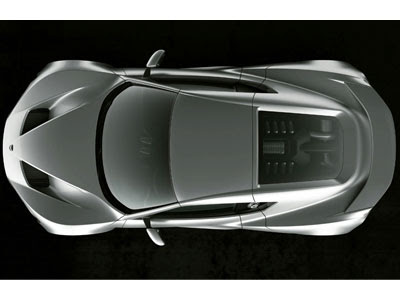
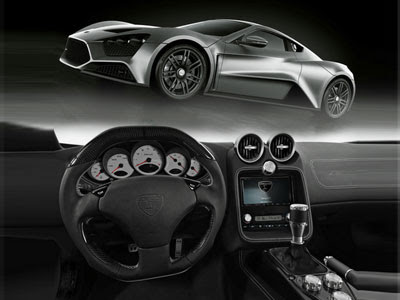
Fledgling Danish supercar manufacturer Zenvo has just released the first official images and final details for the ST1, a brand new supercar from a brand new manufacturer that will join the ranks of the automotive world's elite should it make its production date of early next year. The Zenvo ST1, on paper, looks to compete with the likes of Pagani, Koenigsegg, SSC and Bugatti for the fastest and meanest cars in the world. Probably most expensive as well, though no base price information has been released as of yet.
2010 The Zenvo ST1

Zenvo ST1 is a real supercar with excessive power supplied from a V8 engine with both supercharger and turbo. Zenvo ST1 has 1.104 BHP and 1.430 NM
The car is 100% Danish design. Danish design has always been cutting edge design, but this is the first Danish designed supercar.
At the Zenvo ST1's heart is mysterious 7.0 liter V8 that is rumored to be based on a GM crate motor. The big-displacement V8 is both turbocharged and supercharged, giving the ST1 a power output of 1,104 bhp and 1,055 ft-lb. of torque. In case you were wondering, that puts the Zenvo ST1 power numbers greater than those of the Bugatti Veyron.

2010 The Zenvo ST1

With an electronically limited 233 mph top speed, the ST1 won't be breaking any production land speed records, though. Presumably Zenvo threw the governer into the equation to simplify safety and aerodynamic precautions, as one 200+ mph speeds are reached, stress on tires and body components increases very quickly.
The design brief from the Zenvo creators to the designers at hermann & brandt design consultancy was to design a supercar that looked like no other supercar. The design had to be aggressive mixing supercar styling with race car elements.
2010 The Zenvo ST1

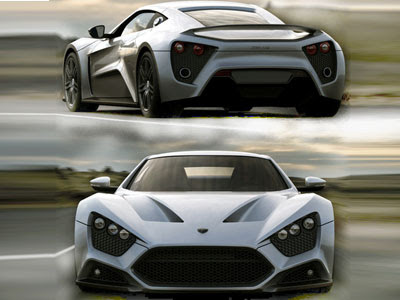
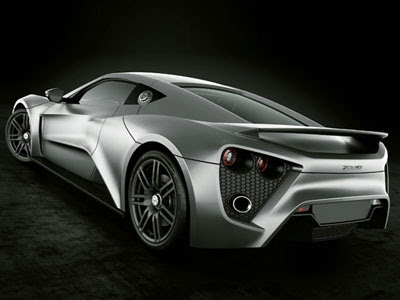
The design of the Zenvo ST1 is made from free flowing accelerating lines creating the shape of the wheel arches, the roof line, side line and the lower side air intake. The sharp lines are connected by muscular organic surfacing creating dramatic reflections. Contrasting the general surfacing the design features a race car inspired lower carbon splitter.
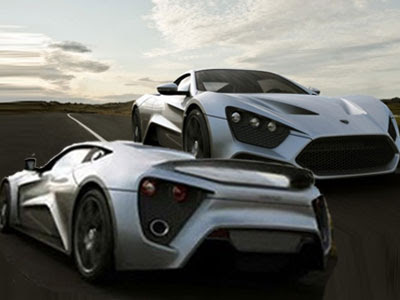
The front of the Zenvo ST1 is designed around the hexagonal trademark Zenvo grille flanked by the large front air intakes used for brakes and engine cooling. The intakes are raked back to minimize drag and at the same time making the side impression of the car more compact.
2010 The Zenvo ST1

The theme of the front is repeated in the rear which is designed around the big diffuser necessary for high speed stability. As on the front the center volume is flanked by large air exits extracting hot engine air as well as housing the exhaust and rear lights.
The rear spoiler mandatory for a car capable of extreme high speeds is partly integrated in the rear wing. It has a unique aerodynamic design following the raked shape of the rear end.